Quick Summary
Chronic sinus pressure is a common problem that many people often ignore or mistake as a common cold that will go away on its own. However, there are some warning signs to watch out for, such as persistent pressure around the nose, forehead, or eyes that may be caused by allergies or a sinus infection. It is important to consult an E.N.T. specialist in this case as cold, allergy and infection require a different treatment approach.
At Dr. Rao’s ENT Super Specialty International Hospital, our specialists often see patients who ignore long-lasting sinus pressure, leading to repeated infections and discomfort. This blog explains how to differentiate between a cold, allergies, and bacterial infection, highlights warning signs that need medical attention, and outlines treatment options. Remember, early diagnosis and proper care can help prevent long-term complications and provide lasting relief from chronic sinus problems.
What is Chronic Sinus Pressure?
Chronic sinus pressure is one of the most common complaints seen in ENT clinics. Many people feel heaviness around the nose, forehead, or eyes and assume it is simply a cold. However, persistent sinus pressure may also be caused by allergies or a sinus infection, and each condition requires a different treatment approach.
Common signs of chronic sinus pressure include facial heaviness or pain around the nose and eyes, nasal congestion, headache, blocked nose, post-nasal drip, and a reduced sense of smell.
Understanding the difference between sinus pressure and a cold, recognising sinus infection symptoms, and identifying the signs of bacterial sinusitis can help you seek the right treatment at the right time.
Ignoring chronic sinus pressure may lead to prolonged discomfort, complications, and recurring infections.
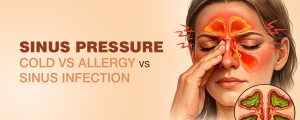
Sinus Pressure – Cold vs Allergy vs Sinus Infection
Chronic sinus pressure can feel similar in all three conditions, but the causes and symptoms are different. Knowing the difference between an allergy vs sinus infection or a cold can help you avoid unnecessary medication and get faster relief.
Sinus Pressure Caused by a Cold
A cold is caused by a viral infection and usually lasts for a short duration. During a cold, the lining of the nose and sinuses becomes inflamed, leading to blockage and pressure.
Common symptoms of cold-related sinus pressure include:
- Runny nose with clear mucus
- Mild headache
- Sneezing
- Low-grade fever
- Sore throat
- Nasal congestion
In most cases, cold symptoms begin to improve within 7 days, though some symptoms like cough may linger for up to 10–14 days.
If the sinus pressure continues beyond 10 days, it may not be just a cold.
Sinus Pressure Caused by Allergies
Allergies occur when the immune system reacts to dust, pollen, pet dander, or environmental triggers. Allergic sinus pressure can last for weeks or months, especially if the trigger is constantly present.
Symptoms of allergy-related sinus pressure include:
- Frequent sneezing
- Itchy nose and eyes
- Watery eyes
- Clear nasal discharge
- Nasal blockage without fever
- Pressure around eyes and cheeks
Unlike a cold, allergies usually do not cause fever. Chronic sinus pressure that keeps returning during certain seasons is often related to allergies.
Sinus Pressure Caused by Sinus Infection
A sinus infection occurs when the sinuses become blocked and filled with mucus. Most sinus infections are caused by viruses. In some cases, the blocked environment allows bacteria to multiply, leading to a secondary bacterial infection.
Common sinus infection symptoms include:
- Thick yellow or green mucus
- Facial pain and pressure
- Headache
- Fever
- Bad breath
- Reduced sense of smell
- Pain while bending forward
When symptoms last for more than 10 days or become severe, the infection may be bacterial.
Symptoms of Bacterial Sinusitis
Not every sinus infection needs antibiotics. Many infections are viral and improve on their own.
However, signs of bacterial sinusitis should be recognized early because they require medical treatment.
Bacterial sinusitis usually develops after a cold or allergy that does not improve.
Common symptoms include:
- Sinus pressure lasting more than 10 days
- Thick yellow or green nasal discharge. Note: Mucus color alone does not reliably indicate whether an infection is bacterial or viral. Yellow or green mucus is common even during a normal viral cold. Duration of symptoms (more than 10 days) is a more reliable indicator.
- Severe facial pain
- Fever above 101 degrees F
- Tooth pain in the upper jaw
- Fatigue
- Bad breath
- Ear pressure
- Post-nasal drip
One important sign is when symptoms improve and then suddenly become worse again. This pattern often indicates bacterial infection.
Bacterial sinusitis can affect the frontal, maxillary, ethmoid, or sphenoid sinuses, causing pressure in different areas of the face.

When to see an ENT Specialist
Many people ignore chronic sinus pressure and rely on home remedies for weeks. However, persistent or severe symptoms should not be overlooked, as untreated sinus problems may lead to complications.
Consult an ENT specialist if you notice any of the following:
- Sinus pressure lasting more than 10 days
- Repeated sinus infections
- Severe headache or facial pain
- High fever
- Thick yellow or green nasal discharge
- Blocked nose that does not improve
- Reduced sense of smell for a long duration
- Severe swelling around the eyes
- Double vision or confusion
- Neck stiffness or vomiting with headache
The above three symptoms (severe eye swelling, double vision/confusion, and neck stiffness with vomiting) require immediate emergency medical attention, as they may indicate serious complications such as orbital cellulitis or meningitis.
- Blood in nasal discharge
Doctors at Dr. Rao’s ENT Super Specialty International Hospital use endoscopic examination and CT scans to detect complicated sinus infections and provide advanced treatment when needed.
Treatment Options
Treatment for chronic sinus pressure depends on the cause. Cold, allergy, and bacterial infection all require different management. Ignoring symptoms or taking random medication can worsen the condition.
Treatment for Cold-Related Sinus Pressure
Since the cold is caused by a virus, antibiotics are not needed. Treatment focuses on relieving symptoms.
Home care includes:
- Steam inhalation (may provide temporary comfort, but use caution to avoid burns)
- Warm fluids
- Saline nasal spray
- Rest
- Pain relief medicines
- Hydration
Symptoms usually improve within a week.
Treatment for Allergy-Related Sinus Pressure
Allergy treatment focuses on controlling the trigger and reducing inflammation.
Common treatments include:
- Nasal steroid sprays (first-line treatment)
- Antihistamines
- Avoiding allergen triggers (dust, pollen, pet dander)
- Allergy testing
- Immunotherapy for severe or persistent cases
People with chronic allergies often develop repeated sinus pressure, so proper diagnosis is important.
Treatment for Bacterial Sinus Infection
Bacterial sinusitis may require medical treatment.
Options include:
- Antibiotics
- Decongestants
- Nasal sprays
- Anti-inflammatory medicines
- Sinus irrigation
If infections keep returning, further evaluation is needed to check for structural problems like deviated septum or nasal polyps.
In some cases, doctors may recommend endoscopic sinus surgery to clear blocked sinuses and prevent repeated infections.
At Dr. Rao’s ENT Super Specialty International Hospital modern endoscopic techniques allow safe and effective treatment for chronic sinusitis with faster recovery.

Home Care vs Medical Treatment
Many people try home remedies for chronic sinus pressure, but not all cases can be treated at home.
Home care may help when:
- Symptoms are mild
- No fever is present
- Duration is less than 5–7 days
- Symptoms are gradually improving
Medical treatment is needed when:
- Symptoms last more than 10 days
- Fever is present
- Symptoms persist beyond 10 days without improvement, or worsen after initial improvement
- Pain becomes severe
- Sinus infections keep coming back
Early diagnosis helps prevent chronic sinusitis and reduces the need for surgery.
ENT specialists recommend not ignoring repeated sinus pressure, especially if it affects sleep, work, or daily life.
Conclusion
Chronic sinus pressure should never be ignored, especially when it keeps coming back or lasts longer than expected. While many people assume it is just a cold, the cause may be an allergy or a bacterial infection. Understanding the difference between sinus pressure vs cold, recognizing sinus infection symptoms, and identifying the signs of bacterial sinusitis can help you get the right treatment early.