Expert ENT Insights from Dr. Rao’s ENT Super Specialty Hospital
Quick Summary: Coughing during winter is extremely common. Most people assume it is just a seasonal cold and wait for it to settle on its own. However, not all winter coughs are harmless. In many cases, persistent coughing may indicate an underlying ENT-related condition rather than a simple viral infection.
At Dr. Rao’s ENT Super Specialty Hospital, we see a significant rise in patients complaining of prolonged cough, throat discomfort, and voice changes during colder months. Understanding the winter cough causes and knowing when to seek ENT evaluation can help prevent complications and ensure faster relief.
This blog explains how to differentiate between a common cold cough and an ENT-related cough, warning signs you should not ignore, and effective treatment and prevention strategies.
What is a Winter Cough?
A winter cough refers to persistent or recurrent coughing that occurs or worsens during the cold season. While many winter coughs begin due to viral infections, environmental factors such as cold air, dry indoor environments, and pollution often aggravate the condition.
Common winter cough causes include:
- Viral upper respiratory infections
- Throat irritation due to dry air
- Postnasal drip
- Acid reflux
- Allergic reactions
- Chronic ENT conditions
If a cough lasts beyond a few weeks or keeps recurring, it may no longer be “just a cold.”

Difference Between Cold-related Cough & ENT-related Cough
Understanding the difference between a simple cold-related cough and an ENT-related cough is essential for timely treatment.
Cold Cough
A cold cough is usually short-lived and self-limiting.
Typical features include:
- Starts with runny nose or sneezing
- Mild sore throat
- Cough lasts less than 10–14 days
- Improves with rest and home remedies
- No significant voice change
This type of cough generally resolves on its own without medical intervention.
ENT-related Cough
An ENT-related cough is often persistent and may worsen in winter due to environmental triggers.
Common ENT-related winter cough causes include:
- Postnasal drip from sinusitis or allergic rhinitis
- Chronic throat irritation
- Laryngopharyngeal reflux (acid reflux affecting the throat)
- Vocal cord inflammation
- Enlarged adenoids or tonsils
Key characteristics:
- Cough lasts more than 3 weeks
- Frequent throat clearing
- Sensation of something stuck in the throat
- Hoarseness or voice fatigue
- Worse at night or early morning
Such symptoms suggest the need for ENT evaluation.
Why Winter Makes Cough Worse
Winter conditions directly affect the throat and airways, making the cough more persistent.
1. Cold, Dry Air
Cold air dries out the throat lining, leading to throat irritation in the cold season, triggering repeated coughing.
2. Indoor Heating
Heaters reduce humidity indoors, causing dryness in the throat and nasal passages, worsening cough and irritation.
3. Increased Pollution
Winter air pollution irritates the respiratory tract and aggravates existing ENT conditions.
4. Reduced Immunity
Seasonal changes and lifestyle factors can weaken immunity, allowing infections and inflammation to persist.
Warning Signs Needing ENT Evaluation
Not all coughs require medical attention, but certain symptoms should never be ignored.
1. Chronic Cough During Winter
If you experience a chronic cough lasting more than 3–4 weeks, it may indicate an underlying ENT issue such as sinusitis or reflux.
2. Persistent Throat Irritation
Constant dryness, burning sensation, or irritation in the throat during the cold season is a red flag.
3. Frequent Throat Clearing
Repeated throat clearing often points to postnasal drip or acid reflux rather than a chest problem.
4. Voice Changes or Hoarseness
Hoarseness lasting more than two weeks may indicate vocal cord inflammation or laryngeal irritation.
5. Cough Worse at Night
Night-time coughing is commonly associated with postnasal drip or reflux-related throat irritation.
6. Cough with Difficulty Swallowing
This symptom should always be evaluated by an ENT specialist.
7. Recurrent Cough Every Winter
If coughing returns every winter, it may be due to untreated allergic rhinitis, sinusitis, or chronic throat inflammation.
At Dr. Rao’s ENT Super Specialty Hospital, early evaluation helps identify the root cause and prevent long-term throat damage.
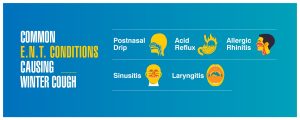
Common ENT Conditions Causing Winter Cough
Several ENT conditions commonly present as a winter cough.
1. Postnasal Drip
Excess mucus dripping from the nose into the throat causes persistent coughing and throat clearing.
2. Sinusitis
Inflamed sinuses lead to mucus buildup, triggering cough, especially when lying down.
3. Acid Reflux (LPR)
Unlike heartburn, reflux affecting the throat may cause cough without chest discomfort.
4. Allergic Rhinitis
Winter allergens such as dust mites can cause nasal congestion and cough.
5. Laryngitis
Inflammation of the voice box leads to hoarseness and a dry cough.
Treatment & Prevention
ENT-recommended Care from Dr. Rao’s ENT Super Specialty Hospital
Treatment Options for ENT-Related Winter Cough
Treatment depends on identifying the exact cause.
1. Medical Management
- Nasal sprays for sinus or allergy-related cough
- Medications to control acid reflux
- Antihistamines for allergic triggers
- Voice rest and throat-soothing medications
Antibiotics are prescribed only when a bacterial infection is confirmed.
2. Advanced ENT Evaluation
ENT specialists may recommend:
- Nasal endoscopy
- CT Scan of the nose and sinus
- Laryngoscopy
- Allergy testing
These help accurately diagnose chronic winter cough causes.
Prevention Tips for Winter Cough
1. Maintain Indoor Humidity
Using a humidifier helps prevent throat irritation during the cold season.
2. Stay Hydrated
Adequate fluids keep the throat moist and reduce irritation.
3. Avoid Throat Irritants
Smoking, secondhand smoke, and polluted air worsen cough.
4. Practice Nasal Hygiene
Saline sprays help prevent postnasal drip and sinus congestion.
5. Protect Your Throat
Cover your mouth and nose when exposed to cold air outdoors.
Frequently Asked Questions
1. What are the most common winter cough causes?
Cold air exposure, throat dryness, postnasal drip, sinusitis, and acid reflux are common winter cough causes.
2. When is a winter cough considered chronic?
A cough lasting more than 3–4 weeks during winter is considered a chronic cough and needs evaluation.
3. Can throat irritation alone cause coughing?
Yes. Throat irritation during the cold season due to dry air or reflux can trigger a persistent cough.
4. Do all winter coughs need antibiotics?
No. Most winter coughs are not bacterial and do not require antibiotics.
5. Why does my cough worsen at night?
Night-time coughing often occurs due to postnasal drip or acid reflux.
6. When should I consult an ENT specialist?
If your cough persists beyond a few weeks, recurs every winter, or is associated with voice changes, an ENT consultation is recommended.
Conclusion:
A winter cough is often dismissed as harmless, but persistent coughing can signal an underlying ENT condition. Understanding winter cough causes, identifying symptoms of chronic cough in winter, and addressing throat irritation during the cold season early can prevent complications and long-term throat issues.
At Dr. Rao’s ENT Super Specialty Hospital, our experienced ENT specialists provide comprehensive evaluation and personalized treatment for winter-related throat and cough problems.
If your winter cough doesn’t improve or keeps coming back, don’t ignore it. Early ENT care leads to faster relief and better respiratory health.