Quick Summary: During the winter season, ENT hospitals see a noticeable increase in patients experiencing nasal blockage, facial pain, headaches, and thick nasal discharge. These symptoms commonly indicate a winter sinus infection, a condition that becomes more frequent as temperatures drop and indoor heating increases.
At Dr. Rao’s ENT Super Specialty Hospital, winter is one of the busiest seasons for sinus-related complaints. Cold air, dry indoor environments, and frequent upper respiratory infections significantly contribute to cold weather sinus problems, making early awareness and prevention essential.
This blog explains why sinus infections worsen in winter, the common seasonal triggers, and how you can effectively prevent and treat winter sinus infections under expert ENT care.
What is a Winter Sinus Infection?
A winter sinus infection occurs when the sinuses i.e. air-filled spaces around the nose, eyes, and forehead, become inflamed and blocked, leading to mucus accumulation and infection. These infections commonly develop after a cold, flu, or allergic flare-up, all of which are more common during the colder months.
Sinus infections are classified as:
- Acute sinusitis – lasting up to 4 weeks
- Subacute sinusitis -lasting 4 to 12 weeks
- Chronic sinusitis – lasting more than 12 weeks
Most winter sinus infections are acute, but delayed treatment can allow the condition to progress into chronic sinusitis.

Why Sinus Infections Worsen in Winter
Winter creates the perfect environment for sinus infections due to a combination of environmental changes and reduced nasal defense mechanisms.
1. Cold Air Weakens Sinus Defense
Cold weather reduces blood flow in the nasal passages, weakening the local immune response. This makes it easier for viruses and bacteria to invade the sinuses, increasing the risk of a winter sinus infection.
2. Dry Indoor Air Irritates Sinus Lining
Heaters and air conditioning systems dry out indoor air, which:
- Thickens nasal mucus
- Reduces the effectiveness of mucus clearance
As a result, mucus becomes trapped, creating an ideal environment for infection.
3. Increased Viral Infections
Winter is peak season for viral illnesses such as:
- Common cold
- Influenza
- Upper respiratory tract infections
These infections cause nasal inflammation and swelling, blocking sinus drainage and leading to secondary sinus infections.
4. More Time Spent Indoors
Spending extended time indoors increases exposure to:
- Dust and indoor allergens
- Pet dander
- Airborne viruses
This aggravates cold-weather sinus problems, particularly in individuals with allergies or asthma.
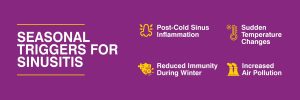
Seasonal Triggers for Sinusitis
ENT specialists at Dr. Rao’s ENT Super Specialty Hospital identify several winter-specific triggers that contribute to sinus infections.
1. Post-Cold Sinus Inflammation
Sinus infections often develop when nasal congestion from a cold does not resolve completely, leading to mucus retention and bacterial growth.
2. Sudden Temperature Changes
Frequent transitions between cold outdoor air and warm indoor environments cause nasal blood vessels to expand and contract rapidly, leading to congestion and impaired sinus drainage.
3. Increased Air Pollution
Winter months often see higher pollution levels, which irritate the nasal lining and worsen sinus inflammation, especially in urban areas.
4. Reduced Immunity During Winter
Changes in sleep patterns, lower physical activity, and nutritional deficiencies during winter can weaken immunity, increasing susceptibility to infections.
Common Symptoms of Winter Sinus Infection
Symptoms of a winter sinus infection may include:
- Persistent nasal congestion or blockage
- Thick yellow or green nasal discharge
- Facial pain or pressure around the cheeks, eyes, or forehead
- Headache that worsens when bending forward
- Postnasal drip
- Reduced sense of smell
- Fever and fatigue in bacterial infections
If symptoms persist beyond 7–10 days or worsen, an ENT consultation is recommended.
Prevention Tips & Treatment
ENT-recommended Care from Dr. Rao’s ENT Super Specialty Hospital
Prevention Tips for Winter Sinus Infections
1. Maintain Indoor Humidity
Using a humidifier helps keep nasal passages moist and prevents dryness that can trigger sinus blockage.
2. Stay Adequately Hydrated
Drinking enough water keeps mucus thin and promotes healthy sinus drainage.
3. Protect the Nose in Cold Weather
Covering the nose with a scarf helps warm inhaled air and reduces irritation to the sinuses.
4. Practice Nasal Hygiene
Regular use of saline nasal sprays or rinses helps flush out allergens, viruses, and thick mucus.
5. Strengthen Immune Health
- Eat a balanced, nutrient-rich diet
- Get adequate sleep
- Manage stress
- Maintain proper hand hygiene
6. Avoid Smoke and Pollutants
Smoking and exposure to secondhand smoke or polluted air worsen sinus inflammation and delay healing.
Treatment Options for Winter Sinus Infection
Treatment depends on the severity and cause of infection.
1. Conservative Home Care
For mild cases:
- Steam inhalation
- Warm facial compresses
- Saline nasal irrigation
- Adequate rest
2. Medical Management
- Decongestants (short-term use only)
- Antihistamines for allergy-related sinusitis
- Nasal corticosteroid sprays
- Antibiotics only when a bacterial infection is confirmed by an ENT specialist
3. When to Consult an ENT Specialist
Consult Dr. Rao’s ENT Super Specialty Hospital if:
- Symptoms persist beyond 10 days
- Facial pain or headache becomes severe
- Fever does not subside
- Sinus infections recur frequently
Early ENT evaluation prevents complications and chronic sinus disease.
Can Winter Sinus Infections Become Chronic?
Yes. Repeated or untreated winter sinus infections can progress into chronic sinusitis, which may require prolonged medical treatment or surgical intervention such as endoscopic sinus surgery.
Early diagnosis and expert ENT care significantly reduce the risk of long-term sinus problems.
Frequently Asked Questions
1. Why do Sinus Infections Increase During Winter?
Cold air, dry indoor environments, increased viral infections, and weakened immunity make sinus infections more common in winter.
2. Can Cold Weather Alone Cause a Sinus Infection?
Cold weather does not directly cause infection but creates conditions that make sinus infections more likely.
3. How Long Does a Winter Sinus Infection Last?
Most acute infections resolve within 7–14 days. Persistent symptoms require ENT evaluation.
4. Are Antibiotics Always Needed for Sinus Infections?
No. Most winter sinus infections are viral. Antibiotics are prescribed only when bacterial infection is confirmed.
5. How Can Cold Weather Sinus Problems be Prevented?
Maintaining nasal hygiene, staying hydrated, avoiding pollutants, and strengthening immunity can significantly reduce risk.
6. When Should I See an ENT Specialist?
If symptoms last more than 10 days, worsen, or occur repeatedly, consult an ENT specialist.
Conclusion
A winter sinus infection is a common seasonal ENT condition caused by cold weather, dry air, and increased respiratory infections. If left untreated, cold weather sinus problems can progress into chronic sinusitis and affect overall quality of life.
At Dr. Rao’s ENT Super Specialty Hospital, our experienced ENT specialists provide accurate diagnosis and personalized treatment using advanced medical and surgical techniques.
If you experience persistent sinus symptoms during winter, early ENT consultation ensures faster recovery and long-term sinus health.