Introduction
Salivary glands play a crucial role in our lives by creating saliva, which moisturizes our mouths, promotes digestion, and protects our teeth. When these glands do not function properly, it can result in uncomfortable and occasionally dangerous circumstances. Let us investigate salivary gland problems, including their causes, symptoms, and available therapies.
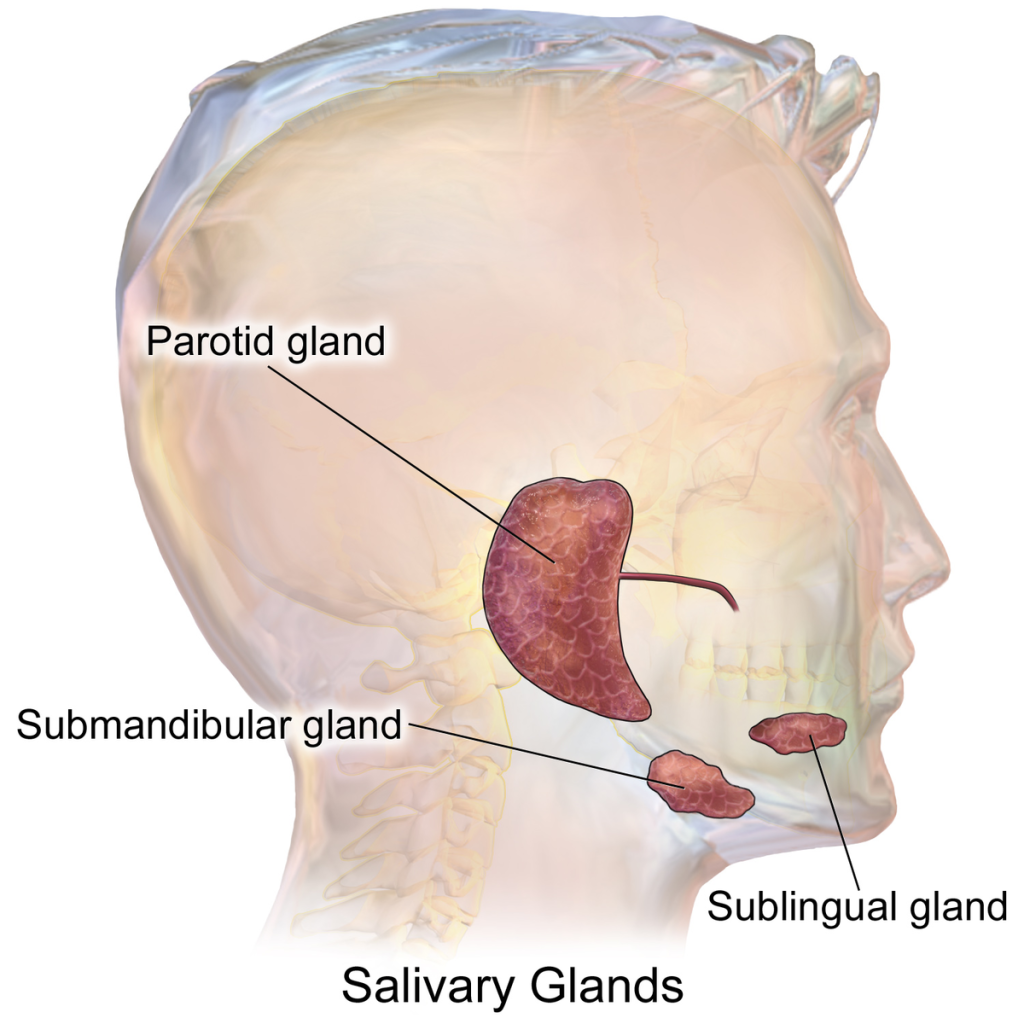
Image courtesy: Wikipedia
What are salivary gland disorders?
Salivary gland diseases develop when the glands responsible for saliva production malfunction. The parotid, submandibular, and sublingual glands are among the many small glands found in the mouth and throat. These illnesses range from minor infections to more serious conditions such as malignancies.
Causes of salivary gland disorders:
Several conditions might cause salivary gland problems:
- Blockages: Calcium stones can form in the salivary ducts, preventing saliva from flowing freely. This condition is known as sialolithiasis.
- Infections: Bacterial or viral infections can cause inflammation of the salivary glands, often known as sialadenitis.
- Autoimmune diseases: Conditions such as Sjögren’s syndrome can damage the salivary glands, resulting in decreased saliva production.
- Tumors: Salivary gland tumors can be benign or malignant, but they are uncommon.
- Dehydration: Not drinking enough water causes saliva to thicken, increasing the likelihood of blockages.
- Medications: Some medications, particularly those used to treat high blood pressure or depression, might cause decreased saliva production as a side effect.
Symptoms
The signs of salivary gland disorders can vary depending on the specific condition.
- Swelling: A noticeable lump or swelling in the cheek, jaw, or neck area is common.
- Pain: discomfort, especially when eating or opening the mouth wide, can occur.
- Dry mouth: Reduced saliva production can lead to a persistent dry feeling in the mouth.
- Bad taste: Some people experience a strange or unpleasant taste in their mouth.
- Fever: In cases of infection, you might develop a fever.
- Difficulty swallowing: Larger swellings can interfere with normal swallowing.
- Facial muscle weakness: In rare cases, tumors can affect nearby nerves, causing facial muscle weakness.
Risk Factors
While anyone can develop salivary gland disorders, certain factors may increase your risk:
- Age: Some conditions, like salivary gland tumors, are more common in older adults.
- Dehydration: Not drinking enough water can increase the risk of stone formation.
- Poor oral hygiene: Neglecting oral care can lead to infections.
- Radiation therapy: Previous radiation treatment to the head and neck area can affect salivary gland function.
- Certain medical conditions: Diseases like diabetes or HIV can increase the risk of salivary gland infections.
Diagnosis
If you’re experiencing symptoms of a salivary gland disorder, it’s important to seek medical attention. Your doctor will likely:
- Perform a physical examination: They’ll check for swelling, lumps, or tenderness in the affected area.
- Ask about your medical history. This helps identify potential risk factors or related conditions.
- Order imaging tests: X-rays, CT scans, or MRI scans can help visualize the glands and any blockages or tumors.
- Conduct a biopsy: If a tumor is suspected, a small tissue sample may be taken for analysis.
- Use sialography: This involves injecting a contrast dye into the salivary ducts to highlight any blockages on X-rays.
Treatment
Treatment for salivary gland disorders varies based on the specific condition and its severity.
- Conservative measures: For minor blockages or infections, drinking plenty of water, sucking on sour candies to stimulate saliva flow, and applying warm compresses can help.
- Medications: Antibiotics may be prescribed for bacterial infections. For autoimmune conditions, immunosuppressants or other targeted therapies might be used.
- Stone removal: Small stones may pass on their own or be removed through the mouth. Larger stones might require minimally invasive procedures or surgery.
- Surgery: For persistent problems or tumors, surgical removal of the affected gland or mass may be necessary.
- Radiation therapy: This might be used in cases of cancerous tumors, often in combination with surgery.
- Lifestyle changes: Staying hydrated, maintaining good oral hygiene, and avoiding tobacco can help prevent future problems.
Salivary gland disorders can significantly impact your quality of life, but with proper diagnosis and treatment, most conditions can be effectively managed. If you’re experiencing persistent symptoms like swelling, pain, or dry mouth, it’s crucial to seek medical attention promptly.
For expert care and treatment of salivary gland disorders, consider consulting the specialists at Dr. Rao’s ENT Hospitals, widely recognized as the best ENT hospital in Hyderabad. Their team of experienced ENT doctors can provide comprehensive evaluations and personalized treatment plans to address your specific needs.
Remember, early detection and treatment of salivary gland disorders can prevent complications and ensure better outcomes. Don’t hesitate to reach out to Dr. Rao’s ENT Hospitals, the best ENT hospital in Hyderabad, for all your ear, nose, and throat health concerns.